
Choosing your affiliate software is a critical decision. We compare the two biggest names in tracking, features, pricing, and ease of use.
In the world of affiliate tracking software, two names consistently rise to the top: Post Affiliate Pro and LeadDyno. Both promise to automate your program and boost your sales, but they are built on fundamentally different philosophies.
Post Affiliate Pro is the established powerhouse, known for its limitless customization and enterprise-grade tracking. LeadDyno is the modern, user-friendly challenger, focusing on ease of use and quick setup.
But which one is actually better for your business in 2025? We’re skipping the individual reviews and putting them head-to-head in a direct showdown.
Post Affiliate Pro vs. LeadDyno: At a Glance
| Feature | Post Affiliate Pro | LeadDyno |
| Best For | Scaling Businesses & SaaS | Beginners & E-commerce |
| Tracking | Advanced (S2S, IP, Pixel) | Standard (Cookie, Pixel) |
| Commissions | Highly Complex (MLM, Split) | Simple (Recurring, Percentage) |
| Ease of Use | Steep Learning Curve | Very Easy / Beginner-Friendly |
| Pricing Model | Based on Tracking Requests | Based on Website Visitors |
| Integrations | 220+ | ~40 |
| Unlimited Affiliates | Yes, on all plans | No, on most plans |
Round 1: Tracking & Accuracy
This is the most important round. If tracking fails, your program fails.
- Post Affiliate Pro (PAP): PAP is the clear winner here. It offers multiple, redundant tracking methods, including S2S (server-to-server), IP address, and pixel tracking. As we covered in our full Post Affiliate Pro review, this combination is as close to bulletproof as you can get…
- LeadDyno: LeadDyno uses reliable cookie and pixel tracking, which is perfectly fine for most standard e-commerce setups. However, it lacks the S2S and advanced methods of PAP, making it slightly more vulnerable to tracking gaps from ad blockers or privacy settings.
Winner: Post Affiliate Pro
Round 2: Features & Customisation
- Post Affiliate Pro: This is PAP’s home turf. Its feature set is bottomless. You can create complex commission structures like multi-tier (MLM), recurring, and split commissions. You can build private campaigns, performance rewards, and more. If you can dream of a rule, you can probably build it in PAP.
- LeadDyno: LeadDyno focuses on the essentials and does them well. It handles recurring commissions and simple percentage payouts perfectly. As we explore in our LeadDyno e-commerce integration guide, its standout feature is its built-in affiliate dashboard tools, like one-click social media sharing, which makes it very easy for your affiliates to promote you.
Winner: Post Affiliate Pro (for power), LeadDyno (for affiliate-facing tools)
Round 3: Ease of Use & User Interface (UI)
- Post Affiliate Pro: This is PAP’s most notorious weakness. The interface is incredibly powerful, but it is also dated and complex. It has a steep learning curve, and new users should expect to spend significant time in the knowledge base.
- LeadDyno: LeadDyno wins this round by a landslide. Its interface is modern, clean, and intuitive. You can launch a new affiliate program in minutes. It’s designed for the busy entrepreneur who needs a “set it and forget it” solution.
Winner: LeadDyno
Round 4: Pricing & Value (The Critical Difference)
This is where the two platforms diverge completely.
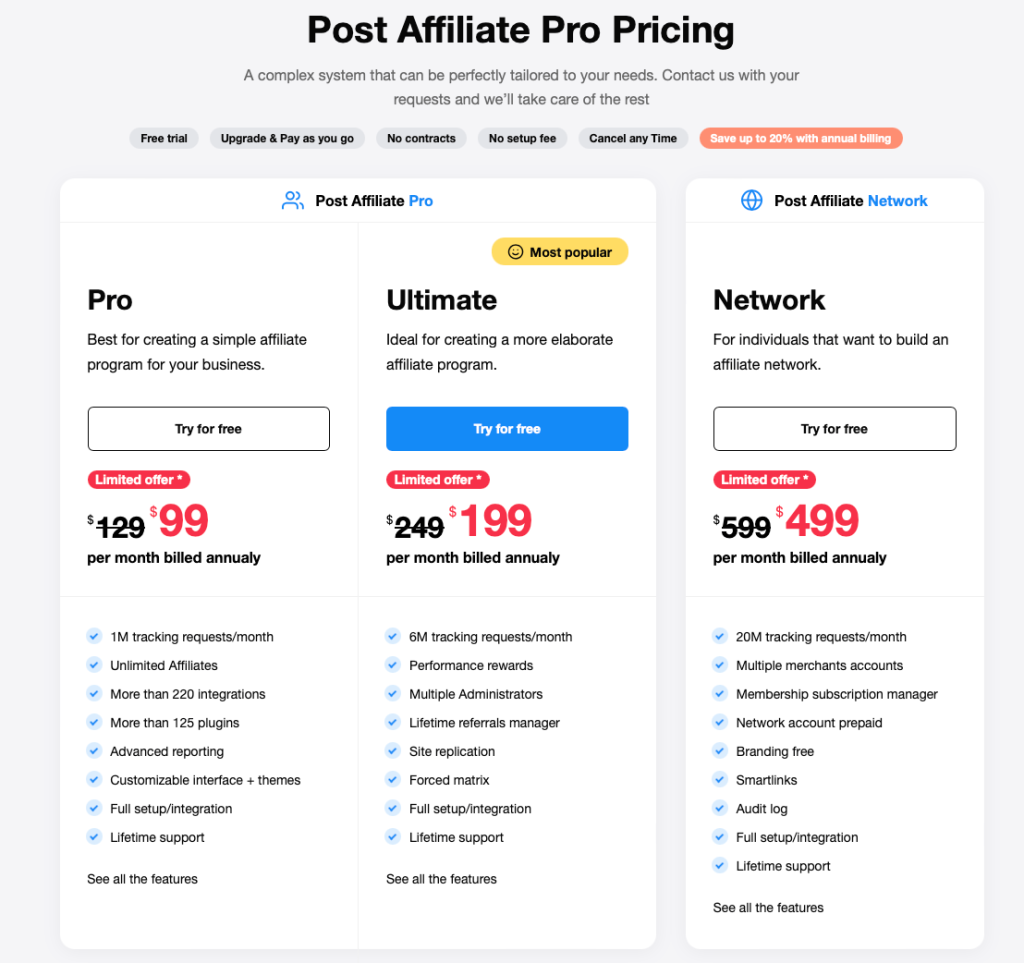
- Post Affiliate Pro: PAP’s pricing (starting ~$129/mo) is based on tracking requests per month. All plans include unlimited affiliates. This model is predictable and scales with your success. More sales mean more tracking, but you are never punished for having a large affiliate army.
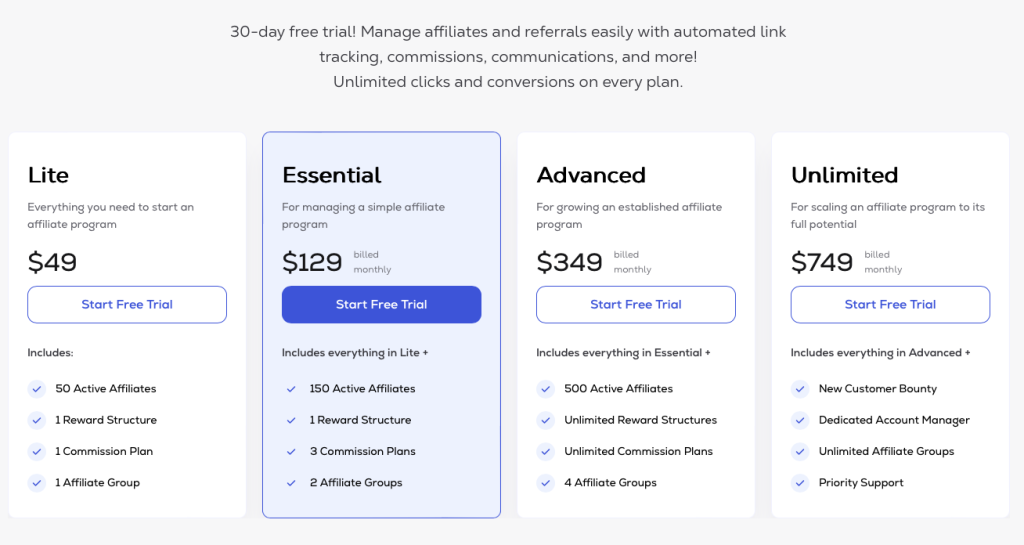
- LeadDyno: LeadDyno’s advertised pricing (starting ~$49/mo) is based on the number of “Active Affiliates” (e.g., 50 affiliates for the $49/mo plan). However, a critical flaw remains: multiple user reports and analyses confirm the risk of “insane” overage fees based on your total monthly website visitors. One Shopify user in late 2025 reported being subject to fees of “$0.05 / visitor” that were not clearly stated in the pricing tiers. Even LeadDyno’s own documentation confirms that legacy plans and current active plans can be billed for extra tracked visits. This model can punish you for growing.
Winner: Post Affiliate Pro (for long-term value and predictable scaling)
Pros and Cons
Post Affiliate Pro: Pros & Cons
- Pros: Best-in-class tracking, unlimited customization, unlimited affiliates on all plans, predictable pricing.
- Cons: Steep learning curve, dated interface, higher starting price.
LeadDyno: Pros & Cons
- Pros: Extremely easy to use, modern UI, great for beginners, excellent affiliate-facing tools (social sharing).
- Cons: Risky pricing model (based on website visitors), fewer advanced features, fewer integrations.
Final Verdict: Who Should Use Which Platform?
Our showdown reveals two very different tools for two very different users.
- Choose Post Affiliate Pro if: You are a serious, scaling business, a SaaS company, or an enterprise. You need powerful, accurate tracking and complex commission rules (like MLM or recurring). You value long-term, predictable pricing and are willing to invest time in learning a complex system.
Start Your Free Trial Now With Affiliate Pro.
- Choose LeadDyno if: You are a beginner, a Shopify store owner, or a small business. Your absolute top priority is getting a simple program launched today. Your commission rules are simple, and you value ease of use over deep customization.
Start Your Free Trial Now With LeadDyno.
If you want a deeper breakdown of the platform’s features and tracking system, read our detailed Post Affiliate Pro review.
Frequently Asked Questions (FAQ)
- Q: Is Post Affiliate Pro better than LeadDyno?
- A: It’s not better, it’s more powerful. Post Affiliate Pro has superior tracking and customization, but LeadDyno is far easier to use.
- Q: Can LeadDyno do recurring commissions?
- A: Yes, LeadDyno handles recurring commissions for subscription products very well.
- Q: Why is LeadDyno’s pricing based on visitors?
- A: This model is common in SaaS, but it’s dangerous for affiliate software. It aligns the company’s revenue with your traffic, not your affiliate-driven sales, which can lead to unpredictable and high costs.
Affiliate Disclosure: This article contains affiliate links. We may receive a commission for purchases made through these links at no extra cost to you.
Disclaimer: The visuals used in this article are AI-generated for illustrative purposes only. They are not screenshots of the actual product and may not represent its exact appearance.

 English